
Choosing between two highly effective skin-tightening treatments is harder than it sounds. Both Morpheus8 and Ultherapy promise firmer, more lifted skin, but they work in completely different ways, and the right choice depends entirely on your goals, your anatomy, and your starting point. If you’re researching your options in Charleston, SC, and feeling stuck between these two treatments, you’re in the right place.
This guide breaks down exactly how each treatment works, what to expect from the experience, and which one is likely the better fit for your specific concerns.
Not sure where to start? Schedule a consultation at Youth Lab – our team is happy to walk you through your options with no pressure.
How Morpheus8 Works
Morpheus8 is a fractional radiofrequency (RF) microneedling treatment. It combines two proven technologies – microneedling and RF energy – to remodel the skin from the inside out.
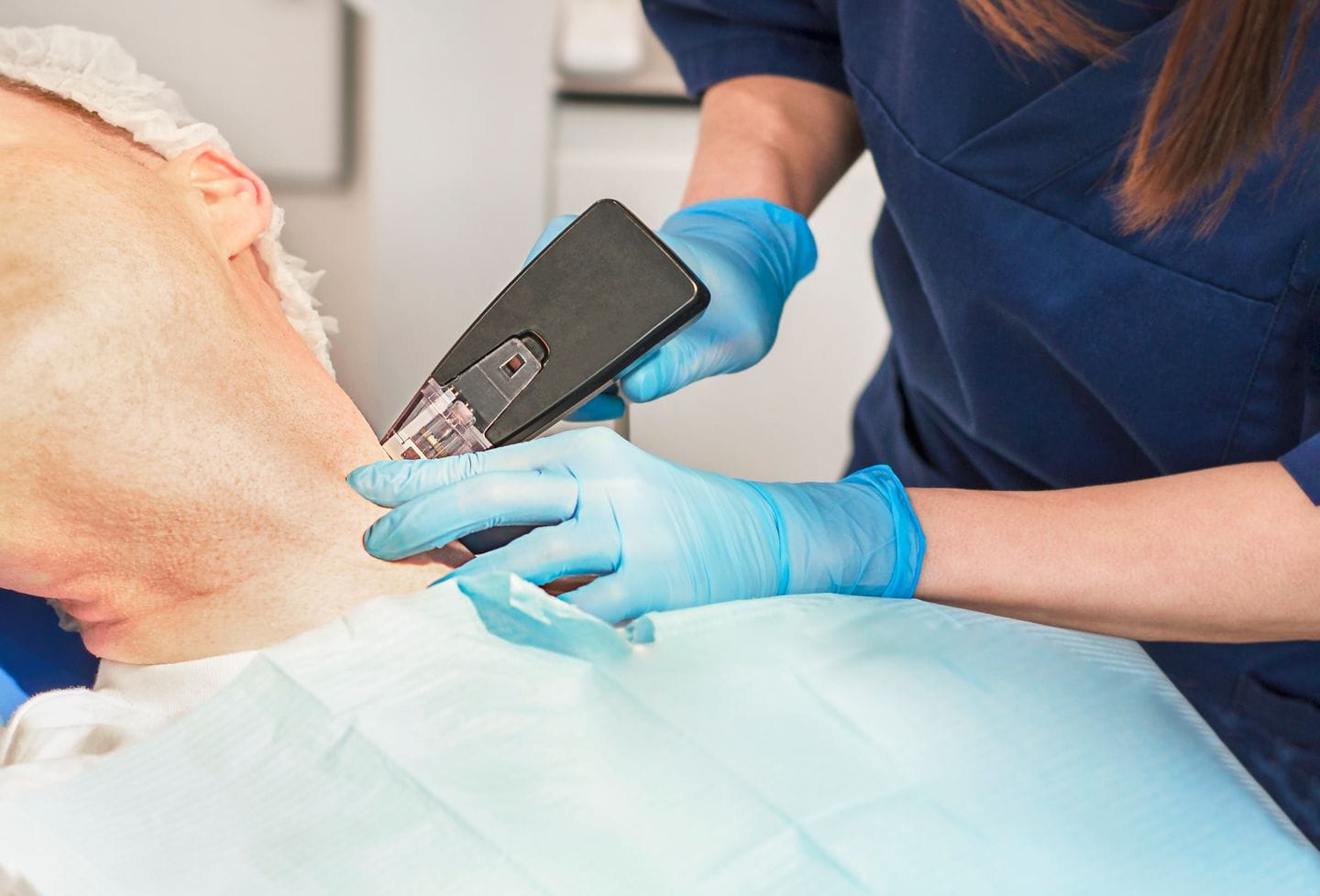
During a Morpheus8 session, a handpiece delivers tiny needles into the skin while simultaneously emitting RF energy at precise depths. This controlled energy heats the deeper layers of tissue, triggering a natural collagen and elastin response. The result is gradual tightening, texture refinement, and contouring that improves over several weeks.
Morpheus8 is particularly effective for the face, neck, and body. It addresses loose skin, fine lines, acne scars, enlarged pores, and early jowling. Because the RF energy penetrates into the subdermal fat layer, it can also subtly contour areas like the lower face and jawline.
Learn more about Morpheus8 at Youth Lab to see if it aligns with your goals.
How Ultherapy Works
Ultherapy uses focused ultrasound energy to stimulate collagen production deep within the skin’s foundational layers. It is the only FDA-cleared non-invasive procedure specifically indicated for lifting the brow, chin, neck, and chest.
The ultrasound energy bypasses the surface of the skin entirely and targets the SMAS layer – the same layer surgeons address during a facelift. This depth is what makes Ultherapy a popular option for patients seeking a genuine lifting effect without surgery or downtime.
Results from Ultherapy are gradual. Most patients see the full effect at around three to six months post-treatment as new collagen continues to develop. A single session is often sufficient, though some patients choose to repeat treatment annually to maintain results.
Key Differences Between Morpheus8 and Ultherapy
Here is a direct side-by-side look at how these two treatments compare across the factors that matter most.
| Morpheus8 | Ultherapy | |
|---|---|---|
| Technology | RF microneedling | Focused ultrasound |
| Primary benefit | Skin tightening + texture + contouring | Lifting + deep tissue stimulation |
| Depth of treatment | Dermis and subdermal fat | SMAS layer (deepest) |
| Best for | Texture, laxity, scarring, pores | Brow lift, neck lift, chin definition |
| Downtime | 2-5 days (redness, swelling) | Minimal to none |
| Results timeline | 3-6 weeks, improving over 3 months | 3-6 months |
| Results duration | 1-2 years | 1-2 years |
| Sessions needed | 1-3 sessions | Typically 1 session |
| Treatment areas | Face, neck, body | Face, neck, chest |
The key takeaway: Morpheus8 addresses a broader range of concerns, including texture and scarring, while Ultherapy is more narrowly focused on lifting and deep structural tightening.
Comparing Treatment Experience and Results
What is the treatment experience like?
Morpheus8 involves topical numbing cream applied before the session. Most patients describe a warm, prickling sensation during treatment. Afterward, expect redness and mild swelling for two to five days – similar to a moderate sunburn. Makeup is typically fine within 24 to 48 hours.
Ultherapy does not break the skin, so there is no visible downtime. However, many patients report that the treatment itself is more uncomfortable than Morpheus8, describing a deep aching or heating sensation during the ultrasound pulses. Some providers offer pain management options to improve comfort.
When will you see results?
With Morpheus8, many patients notice improved texture and firmness within three to six weeks, with continued improvement over three months. Microneedling as a standalone treatment follows a similar timeline, but Morpheus8 goes deeper and typically delivers more significant tightening.
Ultherapy results are slower to appear because the collagen remodeling happens at a deeper structural level. Most patients see the clearest lift at the three to six month mark.
How To Choose Between Morpheus8 and Ultherapy
The honest answer is that neither treatment is universally better. The right choice depends on what you want to address and how your skin is currently behaving.
Consider Morpheus8 if:
- You want to improve skin texture, pore size, or acne scars, alongside tightening
- You have early to moderate skin laxity on the face, neck, or body
- You want visible results in a shorter timeframe
- You are open to a few days of social downtime
Consider Ultherapy if:
- Your primary concern is lifting – especially the brow, chin, or neck
- You want zero visible downtime immediately after treatment
- You are looking for a single-session option with lasting results
- You are comfortable waiting several months for the full effect
Both treatments can also complement each other. Some patients choose Morpheus8 to address texture and superficial laxity, and Ultherapy for deeper structural lifting. Your provider can assess your anatomy and recommend the sequencing that makes the most sense.
If you are also exploring how volume loss is contributing to your concerns, dermal fillers may be a valuable addition to your treatment plan.
Ready to Find the Right Treatment for You?
At Youth Lab in Charleston, SC, we offer both Morpheus8 and a range of advanced skin-tightening treatments. Our only goal is to recommend what will actually work for your skin, your goals, and your lifestyle.
Book your consultation at Youth Lab to begin building a personalized plan together.
Frequently Asked Questions About Morpheus8 vs. Ultherapy
What is the main difference between Morpheus8 and Ultherapy?
Morpheus8 uses RF microneedling to remodel the skin at the dermal and subdermal level, targeting texture, laxity, and contouring. Ultherapy uses focused ultrasound to reach the deepest structural layer of the skin (the SMAS) for a lifting effect.
Which is more effective, Morpheus8 or Ultherapy?
Neither is universally more effective – they treat different concerns. Morpheus8 tends to outperform for texture, scarring, and moderate laxity. Ultherapy is typically more effective for patients whose primary goal is a lifting effect on the brow, chin, or neck.
Is Morpheus8 better than Ultherapy for loose skin?
For mild to moderate loose skin with texture concerns, Morpheus8 is often the preferred option. For patients with more significant skin laxity and a primary goal of lifting, Ultherapy may deliver a stronger result. A consultation is the best way to assess which fits your degree of laxity.
Which costs more, Morpheus8 or Ultherapy?
Pricing for both treatments varies based on the area treated, the number of sessions, and the provider. Both are considered premium non-surgical treatments and are priced accordingly. Contact Youth Lab directly for accurate pricing based on your treatment plan.
Can I combine Morpheus8 and Ultherapy?
Yes, many patients benefit from combining both treatments. Morpheus8 addresses the skin surface and mid-layer, while Ultherapy targets the deepest structural tissue. Used together, they can produce a more comprehensive rejuvenation result. Your provider will recommend appropriate timing between sessions.
How do I choose between Morpheus8 and Ultherapy?
Start with a consultation. A qualified provider will assess your skin laxity, texture, and goals to determine which treatment – or combination – will deliver the best outcome for your specific anatomy.
